
As a Christmas treat, I had my nails done and I love the peace and quiet, the switching off for an hour, although my mind wanders. It struck me how writing an SpLD/dyscalculia assessment or dyslexia report is a lot like getting your nails professionally done… except with fewer glitter options!
At first glance, it might seem like a simple task—just nail-polish—but in reality it requires trained eyes, patience, and precision. The skilled nail-technician doesn’t rush. They carefully clean away what doesn’t belong, examine the natural shape underneath, and notice small things others would miss. Each step is deliberate: choosing the right tools, applying pressure gently, knowing when to pause, adapt and reassess.
When you sit down at the nail salon, the nail technician examines your hands like a forensic detective—checking every cuticle, every ridge, every “oops I picked at that” place. They don’t judge…and they notice. And they know that one wrong brush stroke can turn a ‘heart’ into a ‘demonic face’!
And as an assessor, you also cannot rush. You start by examining the details: the student’s strengths, the errors, the patterns, the “oops, I guessed that one” moments. You’re not judging… but you notice.
💅 1. The Prep Phase
Nail appointment: discussion with the client, putting the client at the centre of the process, filing, shaping, buffing, qualitatively analysing the health of your nails.
Assessment appointment: discussion with the client, collating background information, checking history, putting the client at the centre of the process, triangulation, and qualitatively analysing.
Both take longer than expected and have many layers before you even start the final product!
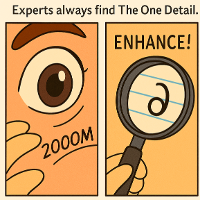
📊 2. The Detailed Examination—an adaptive process
At the salon, the nail technician zooms in on the tiny crack you couldn’t even see and adapts what they need to do.
In the assessment, you zoom in on that error, that piece of qualitative information, like it’s a crime scene—and adapt what you need to look at in more detail.
Both of you are thinking,
“Ah yes… this tells me where I need to go next.”
🧠 3. The Interpretation
Nail tech: This nail shape/ colour will suit your lifestyle and the outcome is clear; the preparation work can’t be seen, but without it, the nails would quickly chip away and not provide longevity.
Assessor: The diagnostic outcome is clear; the preparation work cannot be seen, but without it, the diagnostic outcome is standing on flaky ground, it does not stand up to scrutiny and does not provide longevity.
⏳4. The process requires patience
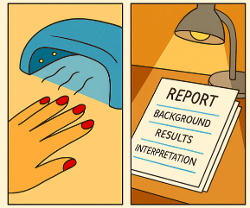
Nail tech: applying each coat and letting them harden, under the UV lamp, before moving on.
Assessor: Proof-reading before moving on, the assessor equivalent of glitter, but unfortunately, we cannot “fast‑dry” a report. If only there were a UV lamp for this!
In both cases, the client walks away feeling polished and ready to tackle the world.
In the end, the result isn’t just something that looks “nice” on the surface. It’s a clear, well-structured outcome that fits the individual perfectly. You sit back, and think: it took ages, but just as professionally done nails allow hands to function confidently and comfortably, a well-written assessment gives the person clarity, and the support they need to move forward.
Assessors have an amazing opportunity to let our students shine!
For ’24’ hints for assessment and report writing, please see: https://educationaccess.co.uk/assessor-advent-activities/ — and an alternative 12 days of Christmas, but applicable throughout the year: https://www.linkedin.com/in/rebecca-thompson-assessor/recent-activity/all/.
Phone: 07999 016437